
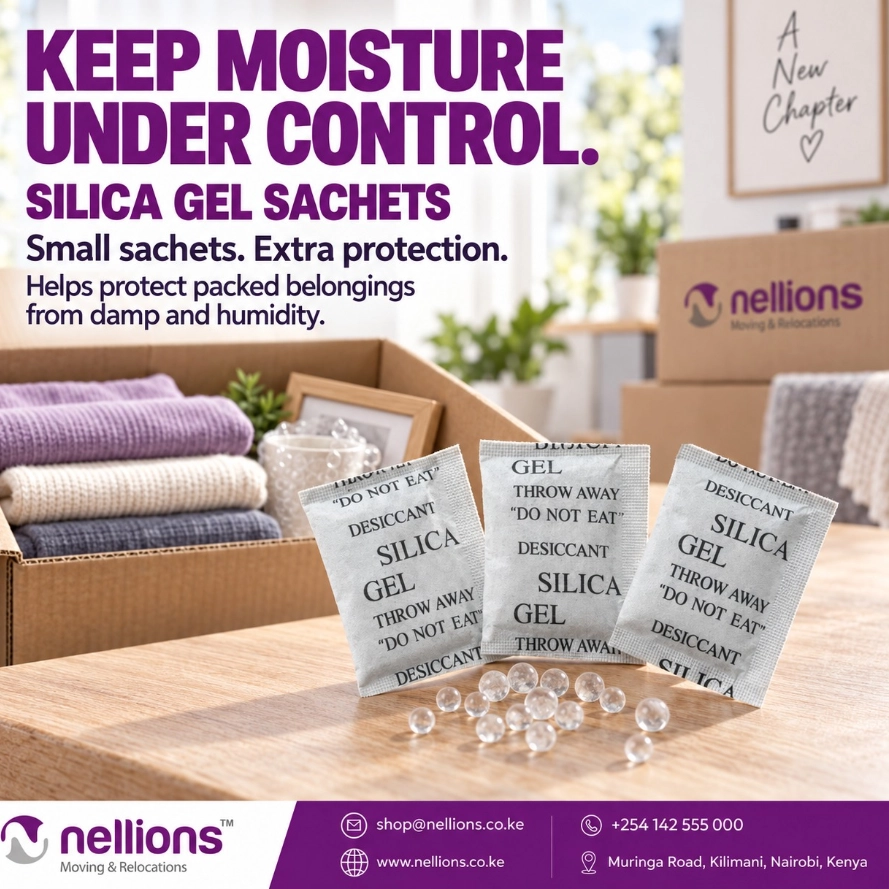
Silica gel is one of the most effective and widely used desiccants in Kenya, serving a critical role by protecting household and office goods from moisture damage, mold and mildew growth, and degradation.
Nairobi sits in a swampy area that is prone to flooding and excessive humidity in many homes and offices, conditions that are conducive for the growth of mold, mildew, and different types of decay. In addition to the impending “superized” el nino many countries are preparing for, it makes sense now more than ever to prepare for moisture control measures such as silica gel desiccants.
Desiccants are a class of products that adsorb and hold water from the atmosphere and surroundings. Silica gel is among the most effective of synthetic desiccants – small volumes can rapidly absorb moisture from a package within 2-3 days. The product can adsorb up to 40% of its own weight in moisture, making it one of the most powerful moisture control agents.
Uses of Silica Gel
Besides moisture control when packing to relocate or for storage, silica gel has various uses in different industries. It can be used to thicken liquids, dull the surface of paints and synthetic films, or eliminate dampness from gases and fluids.
Some uses and applications of silica gel include;
- Food packaging – nuts, coffee beans, tea, dried fruits, spices, grains and other dry foods.
- Clothing and shoes – helps protect stored clothes, shoes and leather goods from excess moisture.
- Storage boxes – helps protect household goods during long-term storage.
- Packaging – helps protect moisture-sensitive products during transportation and storage.
- Tools and metal items – helps reduce moisture-related rust and corrosion.
- Pet food and treats – helps maintain dryness when appropriately packaged.
- International shipping and moving – helps control moisture inside shipping containers and protect household goods during transit.
- Helps keep documents, photos, and leather products in pristine condition years after storage by preventing warping, mold, and dust.
- Added in container shipments to prevent condensation or ‘container rain,’ protecting cargo during international relocations.
- Protects sensitive electronics and optical instruments from moisture damage.
- Used to prevent fogging of camera lenses, eyeglasses, or optical equipment in storage or during assembly
- Used in long-term storage facilities and warehouses to prevent mold and corrosion.
- Maintaining dry conditions for pharmaceutical products to enhance product shelf life and integrity.
- Used in compressed air systems and gas drying in refrigeration
- Used with perfume dispersant in cars and wardrobes
Compared to many other desiccants such as calcium chloride, silica gel offers a balance of high performance, non-toxicity (the blue type with cobalt chloride), and reusability. Other benefits include;
- High adsorption capacity
- Stable and non-corrosive
- Lightweight and easy to use
- Suitable for a wide range of temperature (-40℃ – 60℃)
What are the Different Types of Silica Gel?
Indicating Silica Gel
This variant changes color as it adsorbs moisture, giving a visual indication of its moisture saturation level. Indicating silica gel is ideal where it’s crucial to monitor the moisture adsorption levels continuously. For instance, in laboratories, it can be placed in a desiccator to prevent sensitive chemicals from moisture – a color change signals the need to replace or regenerate the silica gel.
There are two types: blue indicating silica gel and orange indicating silica gel.
The blue indicating silica gel contains cobalt chloride that turns pink when saturated. While the adsorbent is flagged in many countries due to environmental and health concerns, many industries use it where strict moisture control is required – provided it’s not in direct contact with customers. This is increasingly being replaced with safer alternatives.
The orange indicating silica gel turns yellow or green when saturated with moisture. It’s non-toxic and relatively safer for human health and the environment. It’s used where visual moisture indication is required.
White or Clear Silica Gel
This pure form of silica gel without color-indicating agents is the most commonly known and widely used. It’s chemically inert and has excellent moisture-adsorbing properties.
Used in high-end packaging such as for cosmetics where you need the products dry without the risk of color contamination.
- Does not change colour when it absorbs moisture.
- Used for packaging, storage, electronics, documents, clothing, shoes and household items.
- Commonly supplied in moisture-absorbing sachets.
Food-Grade Silica Gel
Commonly supplied in small 1g, 5g and 10g sachets, this type is used to control moisture in packaged dry foods such as:
- Nuts: peanuts, cashews, almonds, macadamia nuts, walnuts
- Coffee: whole coffee beans and ground coffee
- Tea: loose-leaf tea and tea blends
- Dried fruits: raisins, dates, mangoes, banana chips
- Grains: rice, maize, millet, sorghum
- Seeds: chia, sunflower, pumpkin, sesame and flax seeds
- Spices & herbs: chilli, paprika, turmeric, herbs and spice blends
- Baking ingredients: flour, breadcrumbs, cocoa powder and dried yeast
- Snacks: crackers, biscuits, crisps and dried snacks
- Pet food: dry kibble and treats
- Dried vegetables: dehydrated vegetables and vegetable powders
- Jerky and dried meat: where appropriate for the packaging/storage method
Nellions Shop has DMF-free food-grade silica gel that is suitable for use with appropriately packaged food products. Remember to keep the sachet intact and NEVER in contact with or to be consumed with food.
Key Considerations When Using Silica Gel
Silica gel is widely preferred across various industries from automotive to defense, machinery and manufacturing to moving and storage. Some critical points to ensure the effective use of adsorbent silica gel:
- Prevent moisture adsorption before use: Ensure the silica gel packets have minimal exposure to air to prevent them from absorbing moisture before the use for which you intended.
- Distribute the desiccant evenly inside the packaging to ensure effective moisture adsorption
- Determine the correct amount of silica gel so that it’s proportional to the volume of air in the packaging
- Handle silica gel and pack with clean, dry hands to maintain its effectiveness.
- Wear high-quality personal protective equipment (PPE) for prolonged contact or exposure to keep the dust residue of the material from irritating eyes and mucus membranes.
- For non-indicating silica gel, it’s advisable to physically check the level of water adsorption. At Nellions Shop, we recommend considering orange and blue silica gel options along with your white silica gel habits, ensuring maximum efficiency from your desiccants. We advise consulting with a Nellions storage specialist for more information and tailored solutions.
Where to Buy Silica Gel
At Nellions Shop, we supply high-quality silica gel adsorbent in various sizes and types among other moving and packing supplies tailored for personal, commercial, and industrial use.
Our silica gel is:
- Certified for quality and safety
- Available in bulk and custom packaging
- Suitable for international shipping and local supply
Whether you need silica gel adsorption for container shipping, long-term storage of electronics and other sensitive items, or nitrogen generators, we provide reliable moisture control solutions that meet international standards.
So, contact us now via shop@nellions.co.ke or +254142555000 for more information or visit Nellions Shop to make your orders.